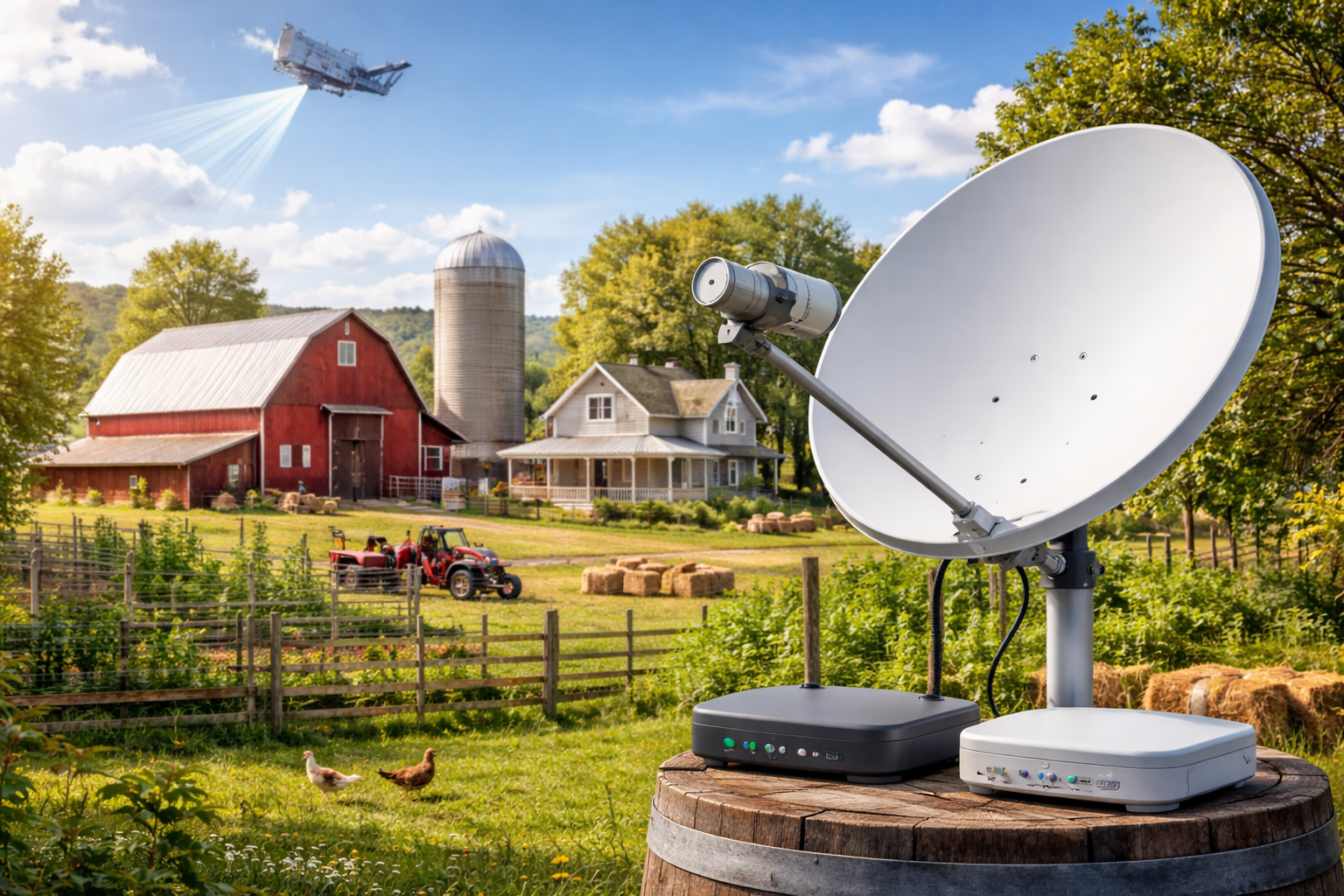
Living on a small rural property has countless benefits — peace, space, and freedom. But when it comes to internet access, things can get complicated. Cable and fiber often stop miles away, and mobile signals can be weak or unstable. That’s where satellite internet becomes a real game-changer.
Satellite internet is often the only reliable way to bring fast, modern connectivity to farms, ranches, and remote rural homes. Let’s explore how it works, the best options available, and whether it’s truly worth it for small rural properties.
What Is Satellite Internet?
Satellite internet delivers connectivity directly from space, bypassing the need for physical cables.
How Satellite Internet Works
The connection follows a simple path:
- Your device sends data to a satellite dish
- The dish communicates with a satellite in orbit
- The satellite sends data to a ground station connected to the internet
This system allows internet access almost anywhere on the planet.
Why It’s Ideal for Rural Areas
Because it doesn’t rely on local infrastructure, distance and isolation are no longer barriers. As long as you have a clear view of the sky, you can get online.
Internet Challenges in Rural Properties
Why Traditional ISPs Don’t Reach Farms
Installing fiber or cable across long distances is expensive. For internet providers, rural areas often don’t offer enough customers to justify the investment.
The Digital Divide Problem
This lack of access creates a digital gap, limiting:
- Education
- Business opportunities
- Healthcare access
Satellite internet helps close this gap.
Types of Satellite Internet
Not all satellite internet services are the same.
Traditional Satellite Systems (GEO)
Providers like HughesNet and Viasat use geostationary satellites located far from Earth.
Modern LEO Systems
Low Earth Orbit (LEO) systems like Starlink, developed by SpaceX, orbit much closer to Earth.
Why LEO Technology Is Revolutionary
Lower orbit means lower latency, which translates to smoother video calls, faster browsing, and better overall performance.
Why Rural Properties Need Reliable Internet
Remote Work on Farms
Today, many rural residents work online:
- Freelancers
- Remote employees
- Online entrepreneurs
Satellite internet makes it possible to live rurally without sacrificing income.
Online Education and Telemedicine
From online classes to virtual doctor appointments, reliable internet is no longer optional — it’s essential.
Best Satellite Internet Providers for Rural Areas
Starlink
Website: https://www.starlink.com
- Speeds: 50–250 Mbps
- Latency: 30–70 ms
- Best option for video calls and remote work
Starlink is currently the top choice for small rural properties.
HughesNet
Website: https://www.hughesnet.com
- Available almost everywhere
- Lower speeds and higher latency
- Best for basic browsing and email
Viasat
Website: https://www.viasat.com
- Better speeds than HughesNet
- Business plans offer improved reliability
Starlink for Small Rural Properties
Speed and Latency
Starlink provides performance comparable to urban broadband, making it suitable for:
- Zoom meetings
- Online learning
- Cloud applications
Installation on Farms
Installation is simple and flexible — roofs, poles, or open land work well as long as the dish has a clear sky view.
HughesNet and Viasat in Rural Areas
Strengths
- Wide coverage
- Proven reliability for basic tasks
Limitations
- High latency affects video calls
- Data caps can be restrictive
They work, but expectations should be realistic.
Satellite Internet vs Other Rural Options
When Satellite Is Better
- Very remote locations
- Areas with no mobile signal
- Large properties far from towns
When Mobile Internet Wins
If 4G or 5G coverage is strong, mobile internet can sometimes be cheaper and faster.
How to Improve Satellite Internet Performance
Dish Placement
- Avoid trees and buildings
- Ensure a wide, unobstructed sky view
Network Optimization
- Use a quality router
- Limit heavy downloads during peak hours
Small adjustments can make a big difference.
Costs of Satellite Internet for Rural Users
Equipment Costs
Most providers require an upfront hardware investment.
Monthly Fees
Satellite plans are usually more expensive than urban broadband — but for rural users, it’s an investment in connectivity and opportunity.
Is Satellite Internet Worth It for Small Farms?
Best Use Cases
- Family farms
- Rural home offices
- Online education households
When It’s Not Ideal
- Heavy gaming
- Large-scale streaming on multiple devices simultaneously
The Future of Rural Connectivity
New Satellite Networks
Companies like Amazon (Project Kuiper) are entering the market, promising more competition.
Impact on Rural Life
More competition means:
- Lower prices
- Better speeds
- Improved quality of life in rural areas
Satellite internet has transformed life on small rural properties. What was once slow and unreliable is now fast enough for work, education, and modern living. While not perfect, services like Starlink offer rural residents a powerful connection to the digital world, without giving up the peace of country life.
If you live on a small rural property and need dependable internet, satellite internet is no longer a last resort — it’s a smart solution.