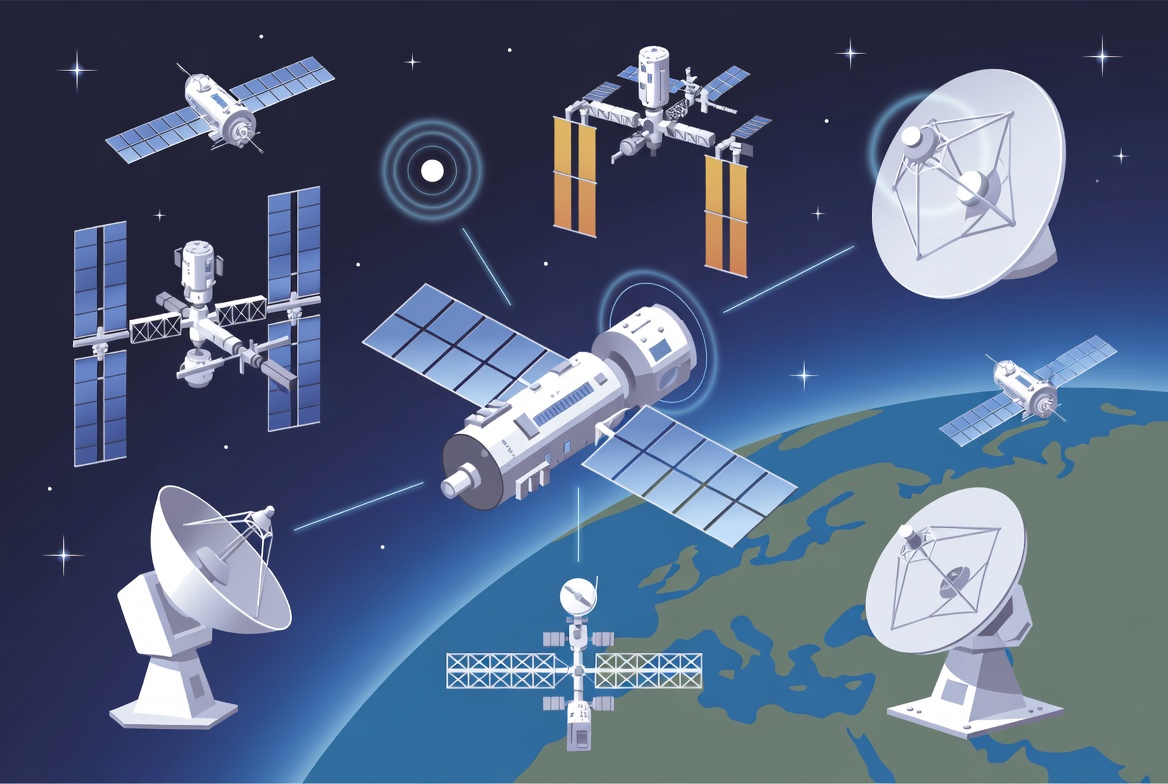
When people hear “space technology,” they often think only about satellite internet or astronauts floating in orbit. But space technology goes far beyond connectivity. It quietly powers many aspects of our daily lives, from food production and healthcare to climate monitoring and navigation.
In this article, we’ll explore how space technology is transforming industries on Earth, often in ways you might not even realize.
What Is Space Technology?
Space technology refers to tools, systems, and innovations developed for use in outer space — including satellites, rockets, sensors, and space stations — that also generate benefits here on Earth.
From the Space Race to Everyday Life
Originally driven by competition during the Cold War, space technology has evolved into a global ecosystem of science, business, and public services.
Why Space Tech Matters Today
Space technology helps us understand our planet, manage resources, and solve complex global problems. It’s no longer about exploration alone — it’s about impact.
Earth Observation and Remote Sensing
One of the most powerful applications of space technology is the ability to observe Earth from above.
Climate Change Monitoring
Satellites track:
- Global temperatures
- Ice melt
- Sea-level rise
This data is critical for climate science and policy decisions.
Disaster Prevention and Response
From hurricanes to wildfires, satellites provide real-time data that helps governments respond faster and save lives.
Agriculture and Precision Farming
Crop Monitoring
Satellite imagery helps farmers:
- Detect crop stress
- Optimize planting schedules
- Increase yields
Water and Soil Management
By analyzing soil moisture and vegetation health, space technology promotes more sustainable farming practices.
Space Technology in Navigation and Transportation
GPS in Daily Life
Global Positioning System (GPS) satellites guide:
- Cars and smartphones
- Delivery services
- Ride-sharing apps
Modern logistics would collapse without space-based navigation.
Aviation and Maritime Navigation
Pilots and ship captains rely on satellite systems for safe and efficient travel across oceans and continents.
Space Technology in Healthcare
Telemedicine and Remote Care
Satellites enable medical consultations in:
- Remote villages
- Disaster zones
- Rural regions
Medical Devices from Space Research
Research conducted in microgravity has led to innovations in:
- Imaging technology
- Prosthetics
- Medical monitoring devices
Environmental Protection Applications
Forest and Ocean Monitoring
Satellites track deforestation, coral reef health, and illegal fishing.
Pollution Tracking
Air and water pollution can be detected from space, allowing faster intervention and regulation enforcement.
Space Technology in Energy
Solar Energy Advancements
Space research has improved:
- Solar panel efficiency
- Energy storage systems
Space-Based Solar Power
Future concepts involve collecting solar energy in space and transmitting it to Earth — a potential clean-energy revolution.
Defense and Security Uses
Border Monitoring
Satellites support border control and maritime security by providing wide-area surveillance.
Cybersecurity from Space Systems
Space-based systems protect communication networks and detect cyber threats.
Space Technology for Smart Cities
Traffic and Infrastructure Monitoring
Satellite data helps cities optimize traffic flow and plan infrastructure upgrades.
Disaster-Resilient Cities
Urban planners use satellite models to design cities better prepared for floods, earthquakes, and storms.
Commercial Space Technology
Space Startups
Companies like SpaceX, Blue Origin, and Planet Labs are reshaping the industry.
New Business Models
Earth observation, space tourism, and satellite analytics are creating entirely new markets.
Education and Scientific Research
STEM Education
Space missions inspire students and fuel interest in science, technology, engineering, and math.
Space Stations and Experiments
The International Space Station enables research that cannot be conducted on Earth.
Space Technology in Communications (Beyond Internet)
Emergency Communications
Satellites provide communication when terrestrial networks fail during disasters.
Global Broadcasting
TV, radio, and emergency alerts rely on space infrastructure to reach global audiences.
Challenges and Ethical Considerations
Space Debris
Thousands of objects orbit Earth, posing risks to satellites and missions.
Data Privacy
As satellite data becomes more detailed, ethical use and privacy protection become essential.
The Future of Space Technology
AI and Space Systems
Artificial intelligence is improving satellite autonomy and data analysis.
Human Expansion Beyond Earth
Moon bases and Mars missions are no longer science fiction — they’re active plans.
Space technology is no longer confined to rockets and astronauts. It’s deeply woven into agriculture, healthcare, energy, security, and environmental protection. As innovation accelerates, its influence on daily life will only grow.
From monitoring climate change to enabling precision farming and saving lives during disasters, space technology is one of humanity’s most powerful tools — not just for exploring the universe, but for improving life on Earth.